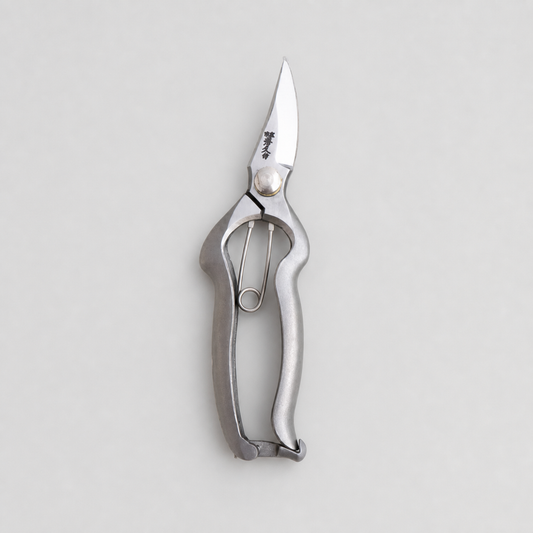
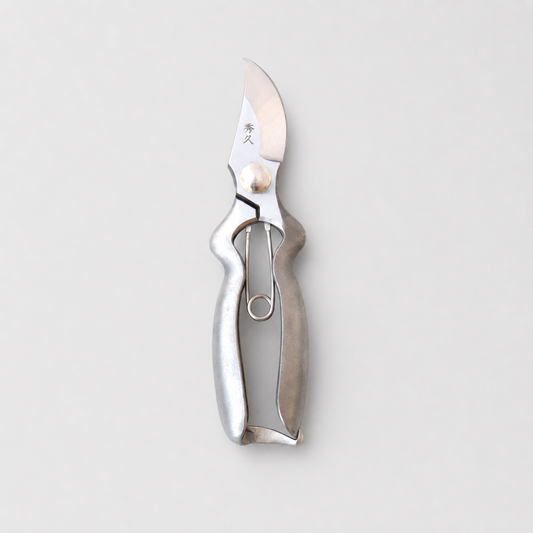
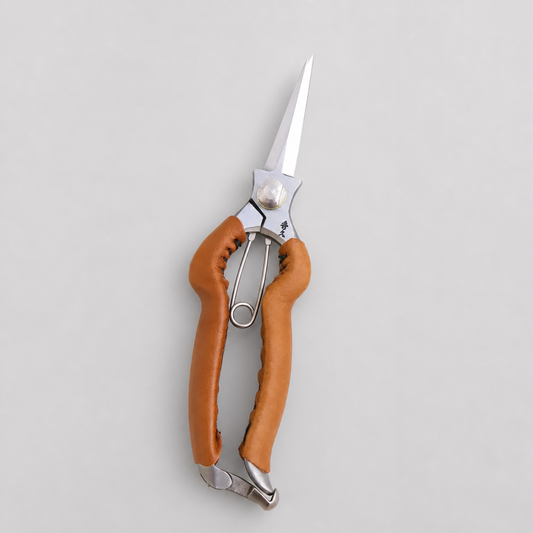
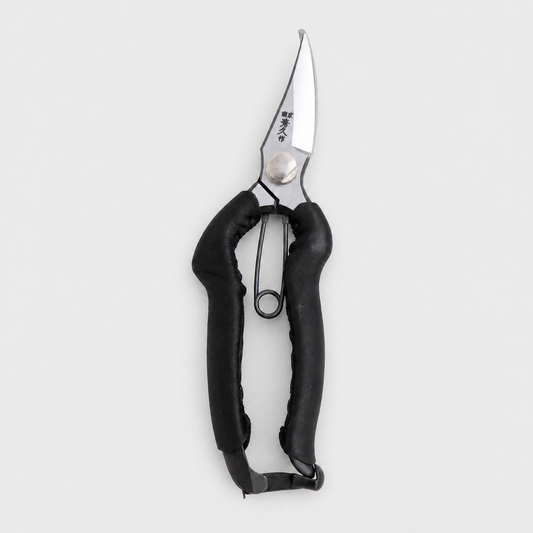
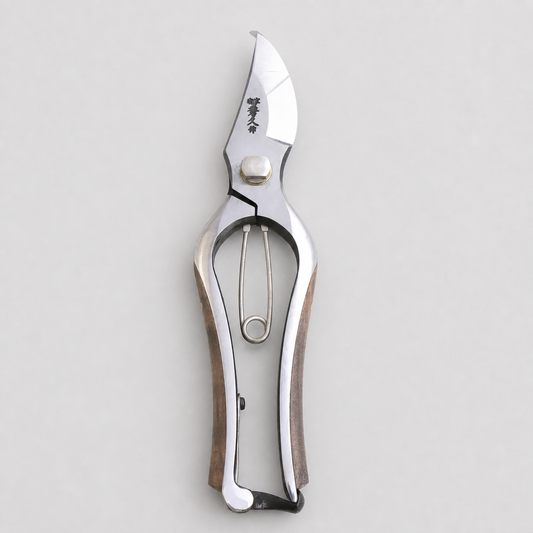
Toyama Hamono: hand-forged Japanese pruning shears, snips and scissors from Sanjo, made since 1861.
Toyama Hamono was founded in 1861 in Sanjo, Niigata, a city with a long metalworking tradition, and still makes its shears by tanzo, traditional forging. Each pair is finished by hand, one at a time: the meeting of the blades, the smoothness of the pivot and the balance are all adjusted before it leaves the workshop. Toyama Hamono’s work has received the Good Design Award and was named Sustainable Garden Product of the Show at the 2023 Melbourne International Flower & Garden Show. We’ve been curating design-led pieces since 2009, and every Toyama Hamono tool we sell is genuine and new.
Shop Toyama Hamono
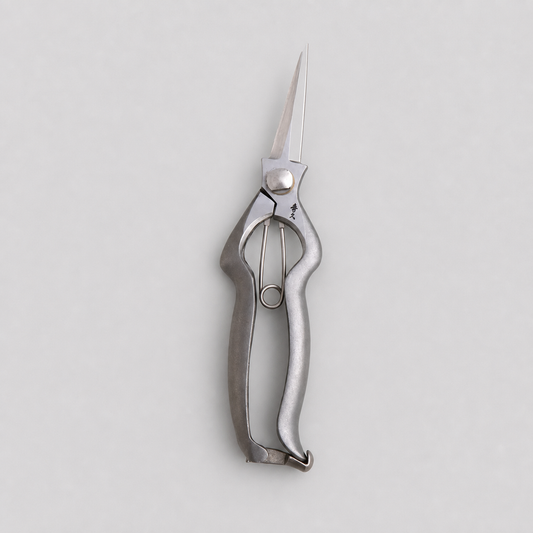
Pruning shears and snips (carbon steel, wood or leather grips)
Stainless steel shears and snips (rust-resistant)
Traditional Japanese scissors (bonsai, ikebana, Okubo)
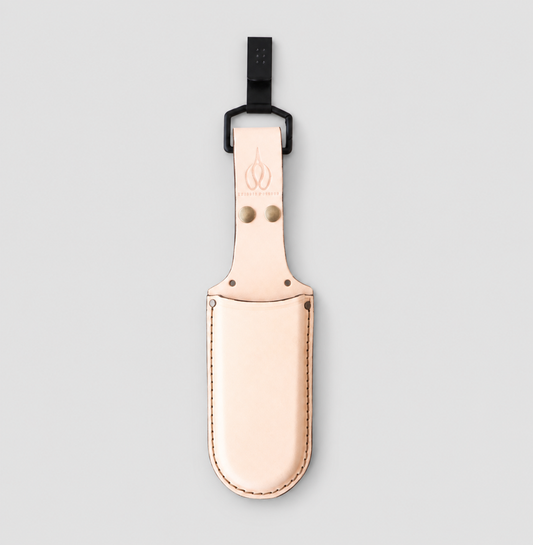
Care and carry
How to choose
For roses, shrubs and general garden pruning, choose a round-blade pair (T101, T13-O, T513, T526). For bonsai, houseplants and cut flowers, choose slim-tipped snips (T102, T103, T27-C, T527) or a traditional pair: T4-4 Koeda for small branches, T8 Warabi for ikebana, T1 Okubo for everyday tasks. Pick stainless if your tools often get wet.
Trade pricing
Designers, architects and contractors: apply to the MetropolitanDecor Trade Program for trade pricing on Toyama Hamono and our full catalog, free catalogs and swatches, and a dedicated trade support line.
Frequently asked questions
Where are Toyama Hamono shears made?
In Sanjo, Niigata, Japan, where Toyama Hamono has forged shears since 1861. Every pair is finished by hand.
Should I choose carbon steel or stainless?
Carbon steel (most models) takes and holds a very keen edge and is easy to resharpen, but needs wiping dry and a little oil. Stainless (T513, T526, T527) resists rust in humid or wet conditions.
Which Toyama Hamono shears are best for bonsai and houseplants?
The slim-tipped T102, T103, T27-C and T527 for thinning and detail cuts, and the traditional T4-4 Koeda scissors for small bonsai branches.
How thick a branch can Toyama Hamono shears cut?
Depending on the model, up to approx. 8–15 mm near the pivot; the T13-O and T513 handle the thickest stems. They are made for live plant material only.
How do I care for Toyama Hamono shears?
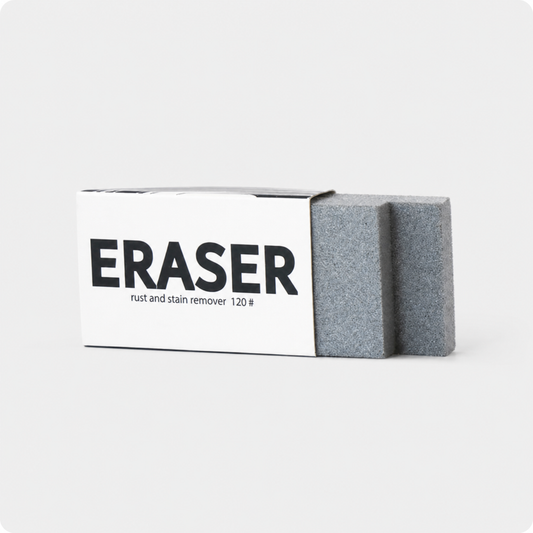
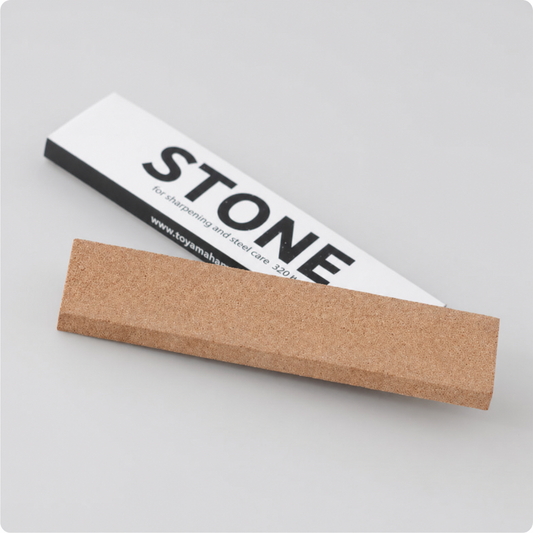
Wipe the blades dry after use, store them indoors, oil them lightly now and then, and use the R3 rust eraser and R2 whetstone to keep them clean and sharp.
How fast do Toyama Hamono tools ship?
In-stock items ship in 2–3 business days; orders over $100 ship free by ground to the 48 contiguous states.